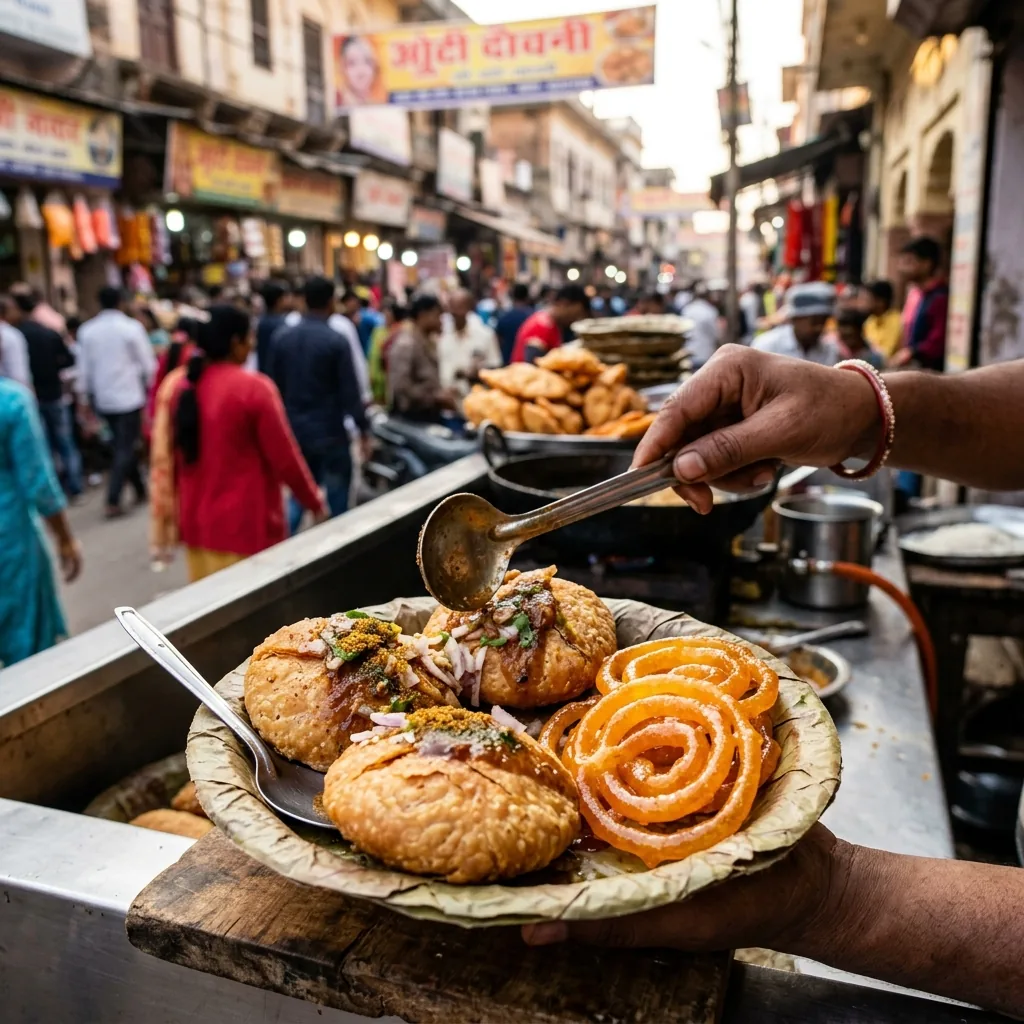
Ayodhya's food scene is one of the great undiscovered pleasures of North Indian travel. This is a city of morning rituals — kachori eaten standing at a street corner, malpua dipped in syrup, chai from a stall where the owner knows every regular by name. It's not sophisticated, it's not Instagrammable in the usual sense, and it's absolutely worth your full attention.
We've been running the Avarna Food Walk from Ramta for a year now. Here is everything we know.
The Essential Ayodhya Breakfast
The Ayodhya breakfast circuit is a pilgrimage in its own right. Start at Ram Halwai near Hanuman Garhi, which has been selling kachori since before independence. The kachori here is fried golden, filled with spiced dal, and served with two sabzis and a chutney that has never changed. Arrive before 8 AM. By 9, the queue makes conversation difficult.
From there, walk to the malpua stall at the Lata Chowk crossing — about 8 minutes on foot. The malpua here is sweet, heavy, and perfect with the cup of barely sweetened chai they hand you without asking. This combination has been a morning ritual for Ayodhya residents for generations.
✦ Avarna Food Walk
We run a guided Ayodhya Food Walk three mornings a week (Tuesday, Thursday, Saturday), departing Ramta at 8 AM. Our guide — a local who grew up in the old city — takes you through 6 stops over 3 hours, including vendors not on any tourist map. Book at the front desk.
Where Locals Actually Eat
Thali Restaurants in the Old City
The best thalis in Ayodhya are in the lanes around Ramkot — the oldest part of the city, closest to the temples. These are small, no-menu establishments where a thali arrives (dal, two sabzis, roti, rice, achaar, papad) and refills are unlimited. Expect to pay ₹80–120 per person. The food is cooked fresh three times daily in enormous vessels on wood fires.
Jalebi and Puri — The Late Morning Ritual
Around 10 AM, the jalebi-puri stalls arrive at the main market near Hanuman Garhi. Freshly fried jalebis — crisp, syrupy, still warm — with puffed pooris and a thin potato subzi. This is the second breakfast of every Ayodhya resident. Don't skip it.
Street Chaat — Evening Only
As the evening cools (around 5 PM), the chaat stalls emerge near Ram Ki Paidi Ghat and the market areas. Pani puri, dahi bhalla, aloo chaat, and the Ayodhya-specific "tamatar chaat" — tomato-based, tangy, eaten with thin sev. The evening chaat circuit near the ghat is one of the most pleasurable ways to spend an hour in Ayodhya.
Sweets — An Ayodhya Speciality
Ayodhya has a deep tradition of sweet-making connected to temple prasad culture. The mithai shops near the Ram Mandir sell an extraordinary range — khoya barfi, peda (Ayodhya's peda is softer and less sweet than the Mathura variant), motichoor ladoo, and the local speciality: "Ram Peda," a golden, ghee-rich sweet offered as temple prasad.
Best Mithai Shops
- Ram Halwai (near Hanuman Garhi) — kachori, malpua, seasonal sweets
- Thakurprasad & Sons (Naya Ghat Road) — pedas and barfis; 70 years old
- Gulab Ji Mithaiwala (Sadar Bazaar) — ladoos and gulab jamun; beloved local
Chai Culture
Ayodhya's chai culture deserves its own essay. The city runs on tea — milky, slightly sweet, cardamom-scented, served in clay kulhads that improve the taste in ways that are difficult to explain scientifically. The best chai in Ayodhya is not at any named establishment. It's the stall near your hotel at 6 AM, where the vendor arrives before sunrise and the first cup costs ₹12.
Dining at Ramta
Our rooftop café at Ramta serves a small, rotating menu of North Indian breakfast and café items — local dishes made thoughtfully, alongside speciality coffee, fresh juices, and our signature masala chai. The rooftop faces the temple skyline: breakfast here, with the sound of morning bells and the view of the city waking, is something our guests return for every morning of their stay. See our rooms and book a stay for the best stay in Ayodhya.