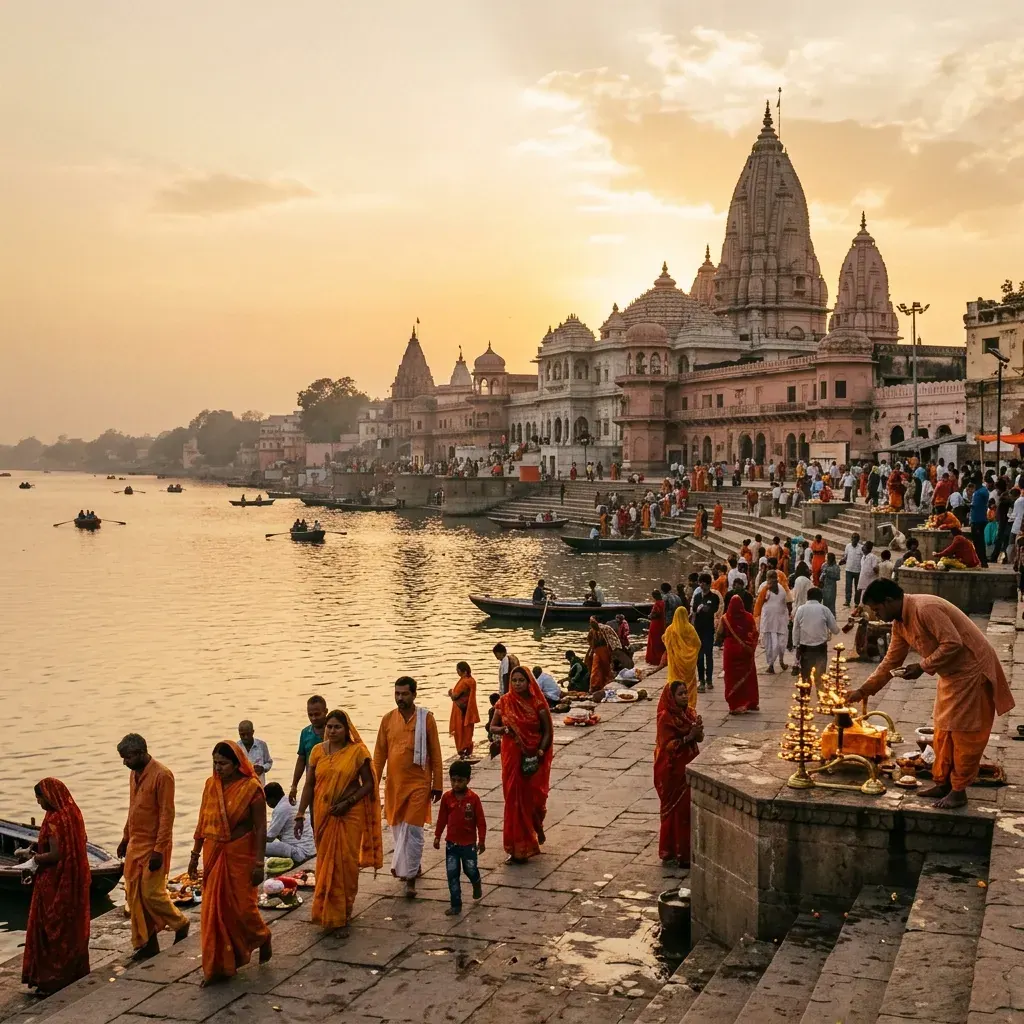
The Ayodhya
Guide
Everything we know about this ancient city — sacred sites, hidden food corners (see our curated experiences), the best time to visit.
Ayodhya is not merely a destination. It is the sacred landscape of an eternal love story — a city that has been the heartbeat of devotion for millennia, now reawakening as one of India's most extraordinary travel experiences. The Ram Mandir changed everything on the outside. But the soul of Ayodhya? That has always been here. In the ghats, the kachori shops, the riverfront chants, and the quiet lanes that tourists rarely find.
How to reach Ayodhya
Ayodhya is well connected by rail, road, and now air. For those seeking an accessible hotel with elevator Ayodhya, Ramta is an excellent choice. Once you arrive, the city is best explored by auto-rickshaw (ideal for a weekend stay Ayodhya) — fast, cheap, and the driver almost always has a story.
By Air
Maharishi Valmiki International Airport (AYJ) opened in 2023 — just 7 km from Ram Mandir. Direct flights from Delhi, Mumbai and Bengaluru. Taxi to Ramta: ~30 min.
By Train
Ayodhya Junction Station is the main hub, with direct trains from Delhi, Lucknow, Varanasi and Mumbai. Ramta is a 1-minute walk from Ayodhya Junction Station — step off the train and you're home. We're always happy to receive you.
By Road
Well connected via NH27. From Lucknow: 2.5 hrs. From Varanasi: 4 hrs. From Delhi: ~7 hrs. Parking available near Ramta — WhatsApp us for directions.
Frequently Asked Questions
Quick answers to common questions about visiting Ayodhya.
What is the best time to visit Ayodhya? +
The best time to visit Ayodhya is between October and March when the weather is pleasant. Major festivals like Deepotsav (Diwali) and Ram Navami are also excellent times for a cultural experience.
How many days are enough for Ayodhya? +
A 2-day trip is ideal. This gives you enough time for Ram Janmabhoomi darshan, exploring Hanuman Garhi, enjoying the Sarayu evening Aarti, and taking a heritage walk.
Where should families stay in Ayodhya? +
Families should look for hotels near the main temples with comfortable amenities. Ramta by Avarna offers premium family stays just a minute from Ram Janmabhoomi.
Which hotel is near Ram Mandir in Ayodhya? +
Ramta by Avarna is located right next to the Ram Janmabhoomi Mandir, less than a 1-minute walk away, making it extremely convenient for darshan.
What are the top things to do in Ayodhya? +
Top things to do include visiting Ram Janmabhoomi Mandir, Hanuman Garhi, attending the Sarayu Aarti at Naya Ghat, exploring Kanak Bhawan, and trying local street food.
Is Ayodhya good for a weekend trip? +
Yes, Ayodhya is perfect for a weekend getaway. It's well-connected and major attractions can be comfortably covered in a 2-day itinerary.
How far is Ram Mandir from Ayodhya Junction? +
Ram Mandir is approximately 1.5 to 2 kilometers from Ayodhya Junction railway station, easily accessible by e-rickshaw or auto.
Is there a hotel with elevator near Ram Mandir? +
Yes, Ramta by Avarna offers an elevator and is located very close to the Ram Mandir, providing accessible luxury for all guests.
Stay at Ramta while you explore
1 min from Ram Janmabhoomi Mandir · Rooftop café · From ₹4,000/night
When to come
Ayodhya is a year-round destination, but the experience changes dramatically by season. Here's how to read the calendar.
October — March
Cool, clear mornings. Perfect for ghat walks, temple trails and sunrise aarti. The city breathes easiest in these months. Our strongest recommendation.
April — June
Intense heat (40°C+) but significantly fewer crowds. If you want Ayodhya without the queues — and you can handle the heat — this window has a quiet magic of its own.
July — September
Lush and atmospheric. The Sarayu fills and turns golden. Rain can disrupt some plans, but the riverside in monsoon is genuinely beautiful. Medium crowds.
Key Festive Dates
These are peak pilgrimage periods — the city is electric, full of devotion, but very crowded. Book Ramta early. Festive pricing: ₹6,000/room/night.
Beyond Ram Mandir
Ram Mandir is magnificent — and you must go. But Ayodhya's sacred landscape extends far beyond its gleaming spires. These are the sites that carry the city's living soul.
Ram Mandir
The centrepiece of a reborn Ayodhya. Go early morning (6am) to experience it in relative quiet — by 10am, the queues are long.
Hanuman Garhi
The beloved hilltop temple of Hanuman. The climb up 76 steps is rewarded with a panoramic view of the city and a spiritual charge that's hard to describe.
Kanak Bhawan
The golden palace gifted by Queen Kaikeyi to Sita. The idol work here is among the most exquisite in Ayodhya. Quieter than Ram Mandir, equally moving.
Sita Ki Rasoi
The mythological kitchen of Sita — a small, intimate shrine that offers a rare, human dimension to the Ramayana's divine characters. Often overlooked. Always special.
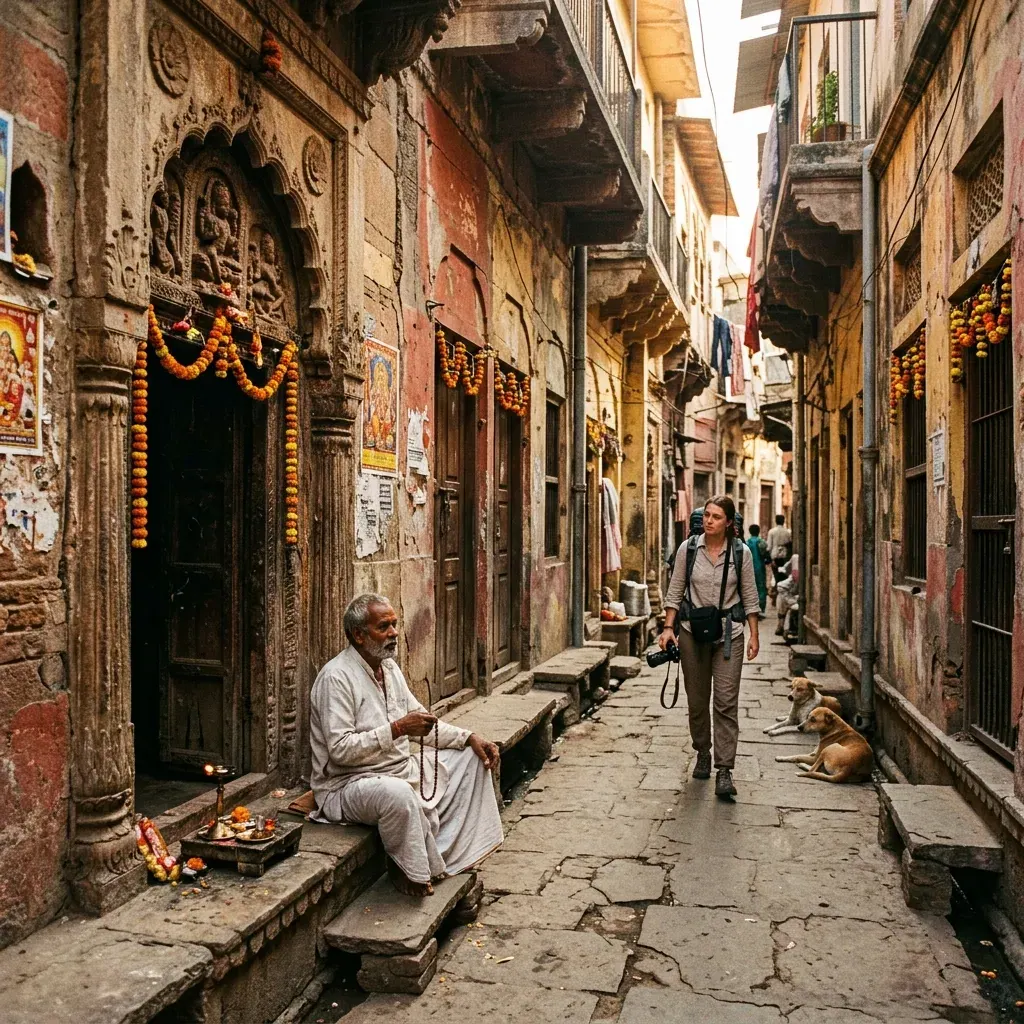
Where locals actually eat
Ayodhya's food is sattvic, joyful and deeply local. Everything here has been perfected over generations — not for tourists, but for pilgrims who eat the same breakfast every morning for decades.
Kachori-Sabzi
The definitive Ayodhya breakfast. Crispy, spiced, life-changing. Best in the old lanes near Hanuman Garhi.
→ Lal Ji Ka DhabaRam Bhawan Sweets
Peda, barfi and laddoo made fresh daily. The prasad-style sweetness you'll be hunting for long after you leave.
→ Ram Bhawan Misthan BhandarTulsi Thandai
Cold, aromatic, loaded with nuts and rose petals. The perfect antidote to a hot afternoon of temple-hopping.
→ Near Sarayu GhatAloo Puri at the Ghats
A quiet breakfast of fluffy puri and spiced potato eaten on a plastic stool facing the river.
→ Naya Ghat stalls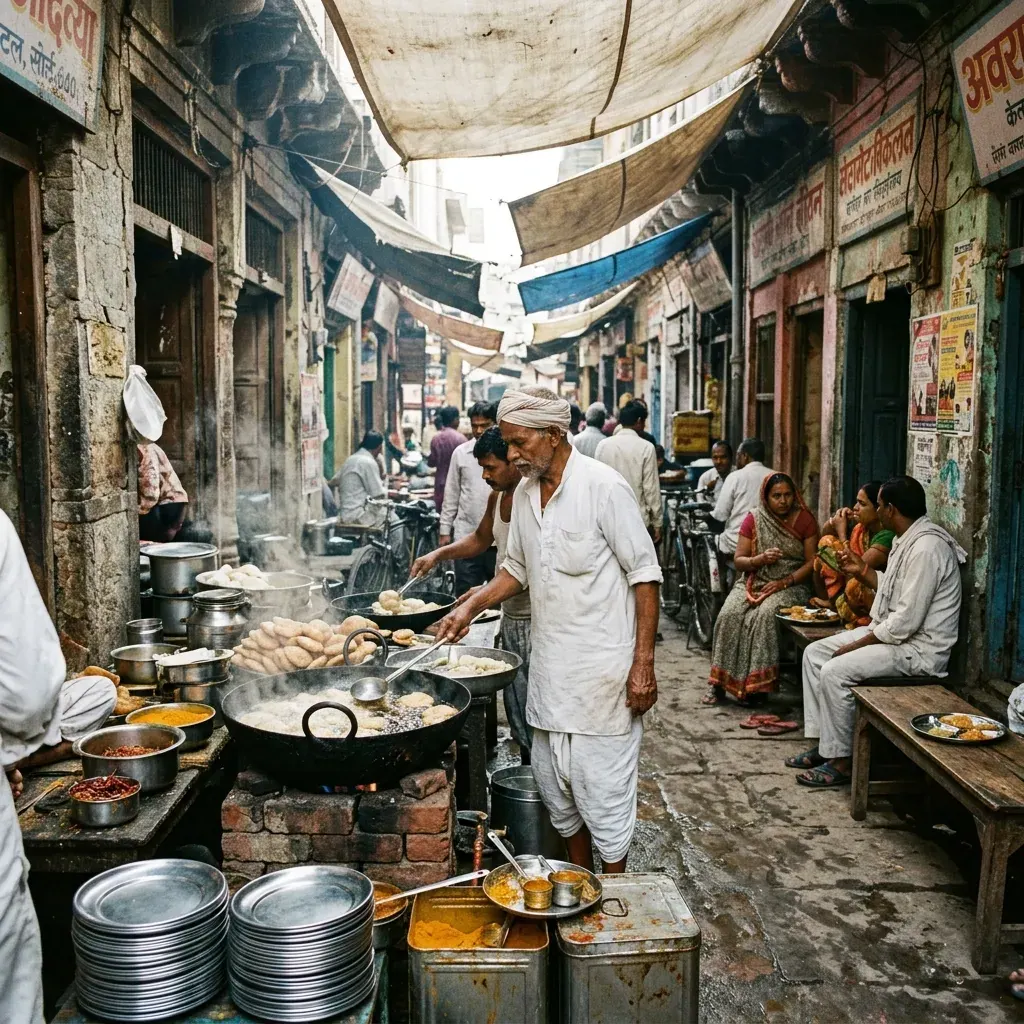
Where the city meets the river
The Sarayu ghats are Ayodhya's living room. Every morning is a theatre of faith, and every evening is one of the most beautiful things you'll ever witness in India.

Sarayu Ghat
The main ghat. Sunrise aarti at 6am is unmissable. Come early, bring nothing but yourself.
Guptar Ghat
Quieter, more contemplative. Sacred to Valmiki tradition. Perfect for a slow morning alone.
Naya Ghat
Best for boat rides at dawn. The water view of the temple skyline from here is extraordinary.
5 things we tell every guest
Go to the aarti at 5am, not 6am
The aarti technically begins at sunrise — but the real magic is in the 30 minutes before, when the priests are setting up, the lamps are being lit, and the river is still dark. That silence is rare. That silence is everything.
Don't queue at Ram Mandir on Saturdays
Saturday is the most crowded day of the week — and by a significant margin. Go on a Tuesday or Wednesday, early morning, and you'll often walk straight in.
Hire a local guide for the first day
Ayodhya is a layered city — each lane has a story that no sign will tell you. A good local guide (we can connect you with ours) turns a sightseeing trip into an entirely different kind of experience. Worth every rupee.
The best food is never near the main temple
Walk from Ram Janmabhoomi Mandir into the old city lanes — that's where the real Ayodhya food lives. The kachori shop with no sign, the chaat cart that's been there for 40 years. Ask your Ramta team for our handmade map.
Stay at least 3 nights
One night is a visit. Two nights is a stay. Three nights is when Ayodhya starts to reveal itself to you — the morning rhythms, the evening chants, the slow magic of a city alive for thousands of years. Give it time.
Stay at Ramta while you explore
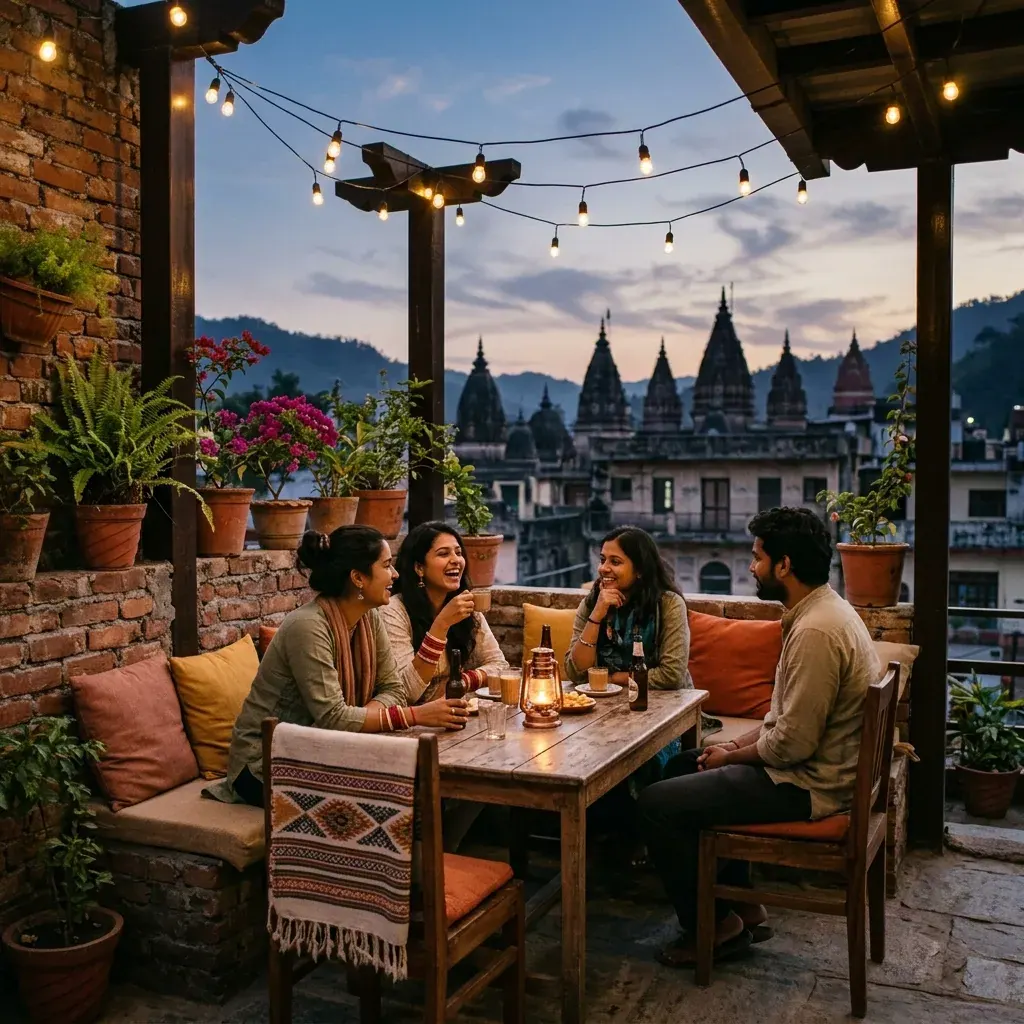
1 minute from Ram Janmabhoomi Mandir. Rooftop café with the temple skyline. Our team knows every corner of this guide — and we're here to make your trip extraordinary.