


 Destinations
Kartik Parikrama and Kartik Purnima transform Ayodhya into its most luminous, most sacred version. A complete guide to this ancient pilgrimage tradition and what to expect.
There are months in the Hindu calendar that are considered ordinary and months considered sacred. Kartik — the eighth lunar month, falling broadly in October and November — belongs firmly in the second category. For pilgrims across India, it is among the holiest periods of the year. For the city of Ayodhya, it is the month when the city reaches its most spiritually charged version of itself.
This guide covers the traditions of Kartik Parikrama and Kartik Purnima as observed in Ayodhya — what they involve, why the city holds particular significance during this period, and what visitors can expect when they travel here in Kartik month.
What Is Kartik Mah — The Significance of the Month
Kartik (also written as Karthik or Kartika) is widely regarded in Hindu tradition as one of the most auspicious months of the year. The month is associated primarily with Lord Vishnu and is considered a time of heightened spiritual receptivity — a period during which acts of devotion, charity, and pilgrimage carry special merit according to religious texts.
A defining feature of Kartik is that it marks the end of Chaturmas — the four-month period during which, according to Vaishnava tradition, Lord Vishnu is believed to rest in cosmic sleep (Yoganidra). Chaturmas begins on Ashadha Ekadashi (Devshayani Ekadashi) and ends on Prabodhini Ekadashi — which falls in the bright fortnight of Kartik, approximately 11 days before Kartik Purnima.
Prabodhini Ekadashi (also called Dev Uthani Ekadashi or Devotthan Ekadashi) is considered the day Lord Vishnu awakens. It is an important milestone within Kartik and directly precedes the most sacred cluster of days in the month — culminating in Kartik Purnima.
The month of Kartik is also associated with the onset of winter, the harvest season, and several major Hindu festivals — including Dhanteras, Diwali, and Kartik Purnima itself.
Kartik Parikrama in Ayodhya — The Tradition
A parikrama is a circumambulation — the act of walking around a sacred site as an act of devotion. In Ayodhya, the Panch Koshi Parikrama is the traditional circumambulation of the city — a 15-kilometre circuit passing through major temples, ghats, and sacred sites. This parikrama is considered particularly meritorious when performed during Kartik month.
During Kartik, thousands of pilgrims come to Ayodhya specifically to complete the Panch Koshi Parikrama — many doing it repeatedly across the month, some completing it on each of Kartik's most significant days.
What the Kartik Parikrama Involves
Daily Sarayu Snan (bath): The cornerstone of Kartik observance in Ayodhya is the early morning bath in the Sarayu river. Pilgrims rise before sunrise — typically between 4:00am and 5:30am — and descend to Ram Ki Paidi and the surrounding ghats for a ritual bath. The practice is maintained daily throughout Kartik month. The pre-dawn Sarayu in Kartik, with its cold mist, oil lamps, and gathering devotees, is one of the most striking atmospheres Ayodhya offers at any time of year.
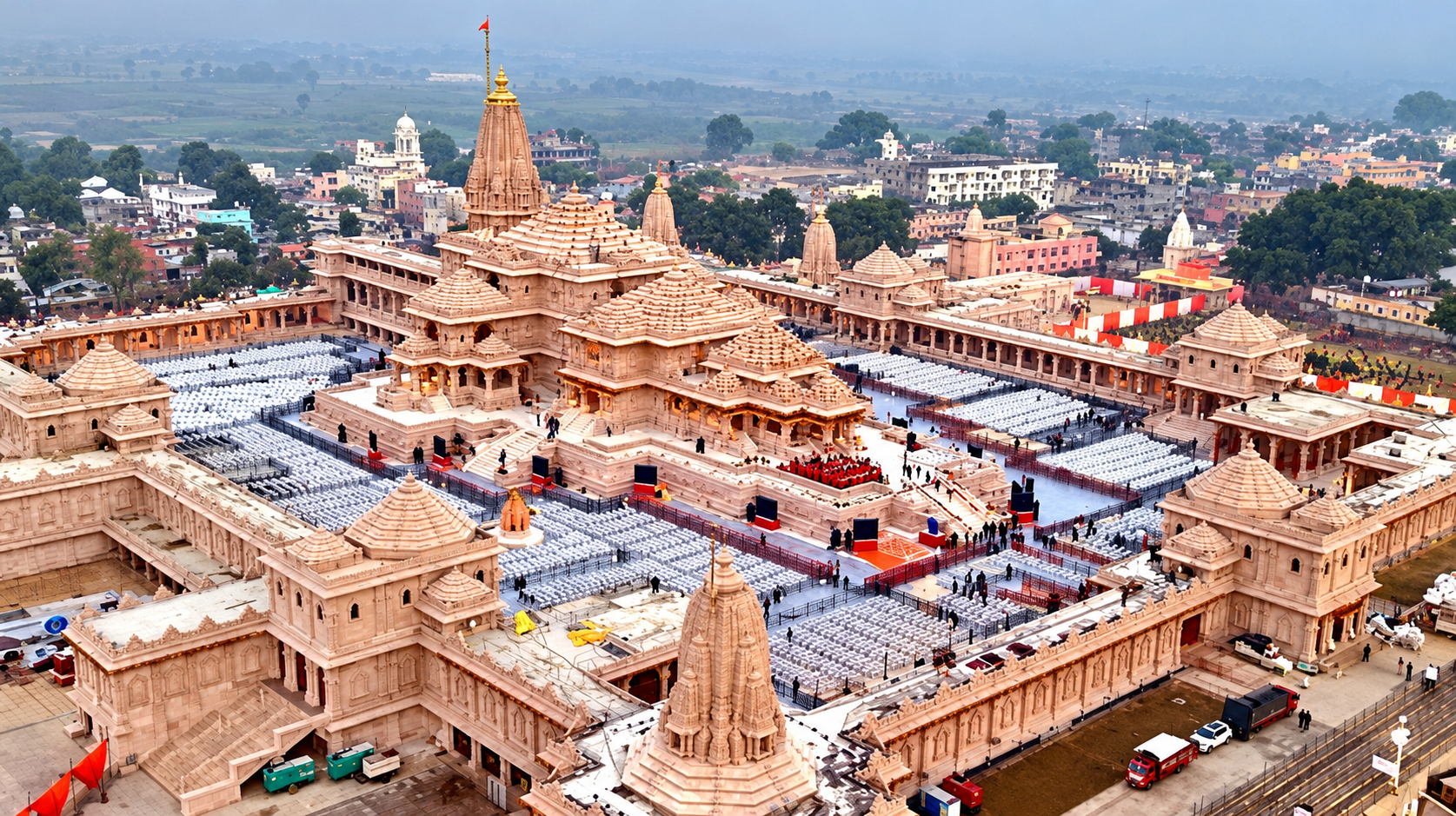
Temple Darshan: Following the morning bath, pilgrims visit the principal temples of Ayodhya — Ram Janmabhoomi Mandir, Kanak Bhavan, Hanuman Garhi, and Nageshwarnath, among others. The Kartik month is considered a time when temple visits hold particular significance.
Deepadan (Lamp Offering): Every evening during Kartik, pilgrims offer diyas (oil lamps) at the Sarayu ghats. The ghat steps are lined with hundreds of small earthen lamps at dusk — an atmosphere that, while less publicised than Deepotsav, is in many ways more intimate and more sustained. This practice continues every single evening throughout the month.
The Panch Koshi Parikrama: The 15-kilometre circumambulation of Ayodhya is traditionally undertaken during Kartik. The route covers all major sacred sites of the city and is typically walked barefoot by devout pilgrims. Most complete the full circuit in a single day, starting before dawn.
Kartik Purnima — The Culminating Day
Kartik Purnima — the full moon day of Kartik month — is the culminating point of the entire sacred month. It falls approximately 15 days after Diwali and is considered among the holiest individual days in the Hindu calendar. The day is marked by river bathing, lamp lighting, and large-scale temple observances across pilgrimage cities throughout India.
In Varanasi, Kartik Purnima is celebrated as Dev Diwali — a city-wide lamp festival on the ghats of the Ganga. In Ayodhya, the observances centre on the Sarayu and have their own distinct character.
How Kartik Purnima Is Observed in Ayodhya
Pre-dawn Sarayu Snan: On Kartik Purnima, the Sarayu bath takes on special importance. Pilgrims begin arriving at the ghats from as early as 3:00am. By sunrise, Ram Ki Paidi is filled with thousands of devotees. The atmosphere — cold air, lamplight, chanting, and the river reflecting the full moon — is unlike anything that happens in Ayodhya at any other time.
Deepadan at the Ghats: On the evening of Kartik Purnima, the lamp offering at the Sarayu ghats is at its most elaborate. Thousands of diyas are placed on the ghat steps, floated on the river, and arranged in patterns along the waterfront. Priests conduct extended aartis. The entire riverfront is illuminated.
Temple Observances: All major temples in Ayodhya hold special ceremonies on Kartik Purnima. Darshan crowds are significantly higher than on regular days — plan accordingly if you are visiting specifically for the Purnima.
Parikrama on Purnima: Many pilgrims choose Kartik Purnima as the day for their Panch Koshi Parikrama — the full circumambulation of the city. The combination of the full moon night and the city's illuminated ghats makes the overnight parikrama (started at midnight, completed by dawn) a particularly memorable experience for those with the stamina for it.
Kartik Purnima 2027 — When to Visit
Kartik Purnima falls on a different date each year according to the lunar calendar, typically in October or November. For 2027, Kartik Purnima falls in November 2027 — verify the exact date on a reliable Hindu Panchang calendar or the temple trust's official communications closer to the time.
When to arrive: Come at least 2–3 days before Kartik Purnima to experience the full arc of Kartik observances — the daily Sarayu snan, the evening deepadan, and the building atmosphere as Purnima approaches.
How long to stay: A 3–4 day stay around Kartik Purnima allows you to attend the main Purnima observances without rushing, do the Panch Koshi Parikrama at a comfortable pace, and visit the main temples when queues are slightly more manageable than on Purnima day itself.
Why Ayodhya Holds Special Significance During Kartik
Among the seven sacred cities of Hinduism (Sapta Puri), Ayodhya is considered particularly significant during Kartik for several reasons rooted in tradition.
The Sarayu river holds a central place in Ayodhya's religious identity — and the act of bathing in the Sarayu is considered especially meritorious during Kartik, according to texts and traditions associated with the city. The convergence of the Sarayu's sacred status with Kartik's elevated spiritual standing makes Ayodhya one of the most sought-after pilgrimage destinations during this month.
The presence of Ram Janmabhoomi Mandir has significantly amplified Ayodhya's draw during Kartik since the temple's opening in 2024. Pilgrims now combine Kartik Parikrama with Ram Mandir darshan — making the experience both more extensive and more spiritually layered for first-time visitors.
Additionally, Kartik month in Ayodhya encompasses Diwali and Deepotsav in its first half — the government-organised lamp festival on the Sarayu that holds the Guinness World Record for the largest simultaneous diya lighting. While Deepotsav and Kartik Purnima are distinct events (Deepotsav occurs around Diwali in the dark fortnight; Kartik Purnima is the full moon a fortnight later), pilgrims who plan their visit to cover both are rewarded with one of the most festival-dense travel windows in India.
What to Expect When Visiting Ayodhya During Kartik
Atmosphere
Ayodhya during Kartik month has a heightened quality that is difficult to fully describe in advance. The city feels more alive — the ghats are busier, the temples are more frequently visited, and the nightly deepadan gives every evening a warmth and radiance that the rest of the year lacks. Even on ordinary Kartik evenings (not Purnima), the ghat steps lit with hundreds of oil lamps at dusk are genuinely spectacular.
Crowd Levels
Kartik is a high-footfall period for Ayodhya — particularly around Diwali and Deepotsav, and again at Kartik Purnima. Expect busy temples, longer queues at Ram Janmabhoomi, and a lively, crowded ghat atmosphere. These are not drawbacks — they are part of what makes the experience of Kartik in Ayodhya distinct. But plan accordingly: visit Ram Janmabhoomi early morning (6:00am–8:00am) for shorter queues, and arrive at the ghats at least 30–40 minutes before the evening aarti to find a good spot.
Weather
Kartik month in Ayodhya falls during the transition from post-monsoon to early winter. Temperatures range from approximately 15°C at night to 28°C during the day. The pre-dawn Sarayu bath in Kartik requires some fortitude — river water temperatures can be cool. Mornings and evenings are pleasant; afternoons are warm but not uncomfortable. Light layers for evening and early morning are advisable.
Practical Guide — Visiting Ayodhya During Kartik Purnima
Getting to Ayodhya
By air: Maharishi Valmiki International Airport (AYJ) has direct flights from Delhi, Mumbai, and Bengaluru. Taxis to the city centre take 15–20 minutes.
By train: Ayodhya Dham Junction (AYDH) is well-connected from Lucknow (90 minutes), Varanasi (3.5 hours), and Delhi (8 hours by overnight train). The station is about 2km from Ram Janmabhoomi.
By road: 130km from Lucknow (2.5 hours) and 200km from Varanasi (4 hours) via expressways.
Kartik Purnima Day — Hour by Hour
Time Activity 4:00am Arrive at Ram Ki Paidi for the pre-dawn Sarayu snan 5:30am Sarayu Ghat morning aarti 7:00am Kachori breakfast from Ram Halwai near Hanuman Garhi 8:30am Ram Janmabhoomi Mandir darshan (queues shortest early morning) 11:00am Kanak Bhavan Temple 12:30pm Lunch — thali at a dharamshala near Kanak Bhavan 2:00pm Rest (the afternoon is best spent indoors) 4:30pm Panch Koshi Parikrama (partial) or Sarayu boat ride 6:30pm Evening deepadan at Ram Ki Paidi — full moon rising over the Sarayu 8:00pm DinnerBook Accommodation Well in Advance
Hotels in Ayodhya fill up significantly during Kartik month — particularly in the 4–5 day window around Kartik Purnima. If you are planning to visit for Kartik Purnima 2027, book your accommodation at least 6–8 weeks in advance. Availability close to the date will be limited and significantly more expensive.
Where to Stay in Ayodhya During Kartik
For the Kartik Parikrama and Purnima observances, the most important factor when choosing a hotel in Ayodhya is proximity to the Sarayu ghats and Ram Janmabhoomi. The pre-dawn Sarayu bath requires being up and walking to the ghat before 5:00am — navigating Ayodhya's lanes in the dark is significantly easier when your hotel is close.
Ramta by Avarna is located a one-minute walk from Ram Janmabhoomi's entrance gate and a short walk from Ram Ki Paidi — placing it at the heart of everything that happens during Kartik. For pilgrims attending the pre-dawn Sarayu snan, the proximity means no auto-rickshaw at 4am, no navigating unfamiliar lanes in the dark, and no stress before one of the most significant moments of the day.
The hotel has an elevator (rare among hotels in this part of Ayodhya), a rooftop café with views of the illuminated Ram Janmabhoomi complex, and a team that assists with darshan timings and temple information. Rooms from ₹4,000/night.
Book for Kartik Purnima 2027 as early as possible — availability in this location during the festival period is limited.